Champagne: Famous for Wine, Once Famous for Trade
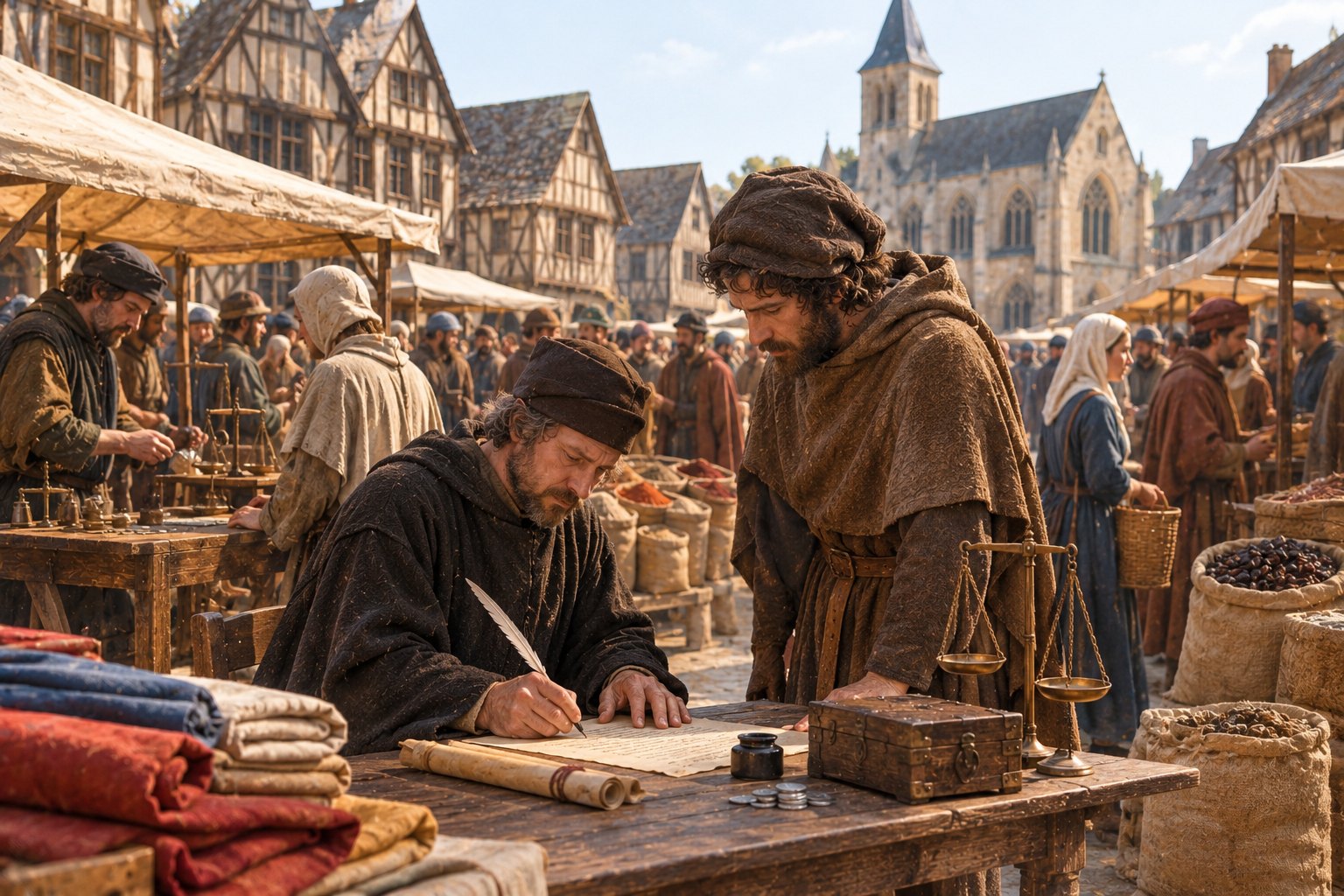
Champagne is famous today for its wine, but it was once famous for trade. Long before the sparkling wine, the region was one of medieval Europe's busiest commercial hubs.
In the 12th and 13th centuries, merchants from across Europe gathered at the Champagne Fairs to trade spices, silk, wool and textiles.
But they didn't just exchange goods. They also exchanged currencies, extended credit and developed ways to settle payments across long distances.
By the late 12th century, Genoese merchants were already using notarized foreign-exchange contracts. A typical arrangement: a merchant borrowed money in Genoa and agreed to repay it at a later date at a trading fair in another city, potentially in a different currency. A notary recorded the agreement, and the merchant or his agent would travel to the destination to make the repayment.
No need to carry large amounts of money across Europe just to pay a debt along the way.
These early contracts helped pave the way for the bill of exchange, one of the foundations of international Trade Finance.
Trade has always been about more than moving goods. It's also about finding ways to move money.
Sources: Champagne fairs, Wikipedia; Deutsche Bundesbank, The origins of cashless payments.